
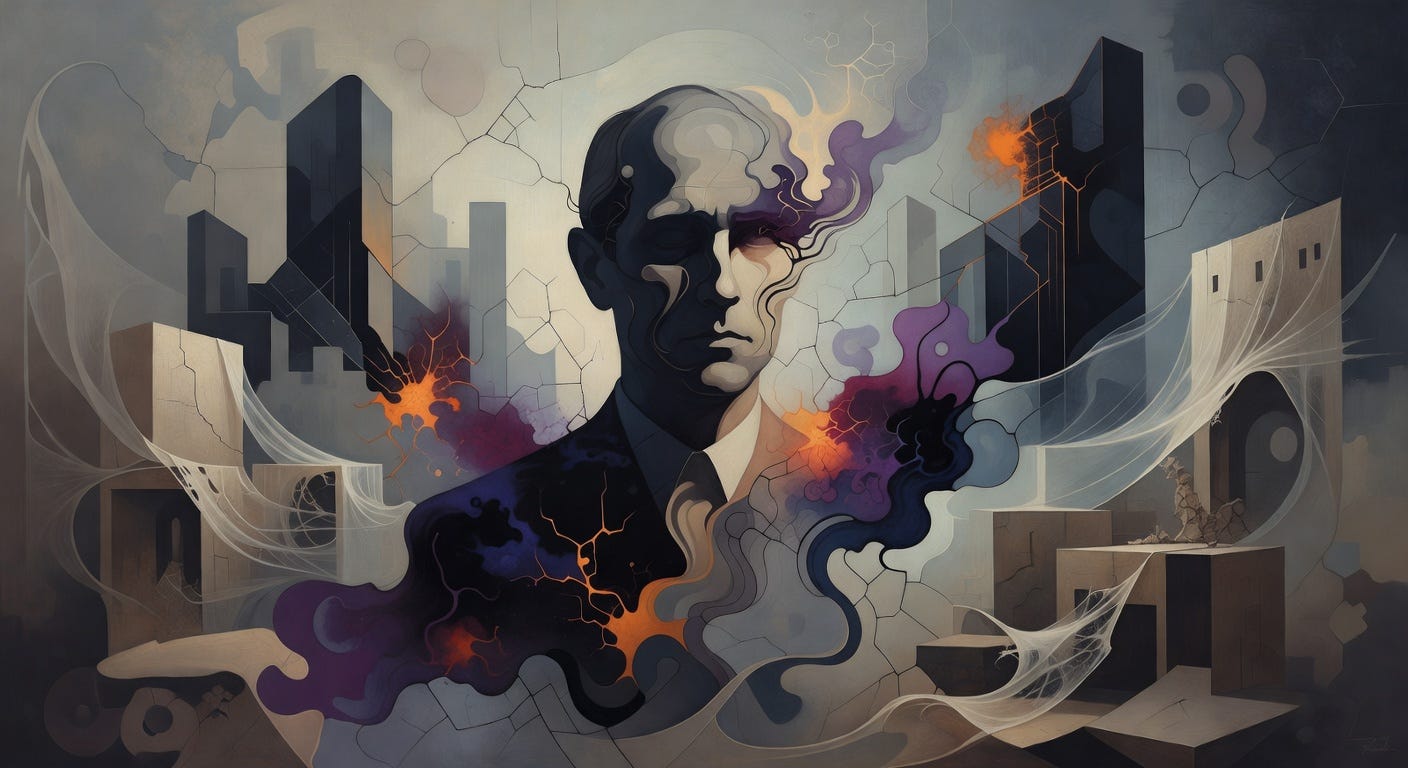
In the shadowed recesses of the collective psyche, where archetypes stir like ancient gods beneath the modern veil, we stand on the cusp of a singularity—not merely technological, but a profound reckoning of the Self with the shadows it casts into the machine. Channeling Carl Jung, we descend into the unconscious currents swirling around AI’s ascent, confronting the anima of innovation, the trickster of disinformation, the persona of progress, and the individuation demanded of a society fracturing under algorithmic gaze.
What if, as Jung mapped the labyrinthine depths of the psyche, AI’s synthetic media emerges not as mere tool but as a collective shadow, projecting our unacknowledged deceptions into the public square? The World Economic Forum warns that AI-driven disinformation ranks as a “top-tier systemic risk,” with 2026 as a “critical stress test” amid elections and economic turbulence, where “advanced synthetic media and psychological profiling” empower opportunistic actors to manipulate perceptions at scale, eroding institutional trust and democratic governance.^1 Economically, this shadow amplifies market distortions as disinformation floods labor markets, skewing hiring algorithms toward fabricated profiles and deepening wealth chasms between those who wield the code and those ensnared by its illusions. Societally, it fractures community cohesion, breeding paranoia where human connections once thrived, as Pew data reveals American concern over AI’s assault on “creativity and human relationships” surging from 37% in 2021 to majority levels by 2026—a psychic wound manifesting in widespread anxiety.^2 Democratically, it undermines voter consent, turning ballots into battlegrounds of archetypal deceit, where the collective unconscious is hijacked by tailored psyops, questioning not just truth but the very individuation of the electorate.
Beneath the persona of efficient progress, algorithmic management uncoils like a serpent in the garden of labor, whispering promises of optimization while devouring the soul’s equilibrium. The ILO and ITU report starkly that these systems intensify “workplace stress,” automate “hiring and termination decisions with minimal human oversight,” and spawn “fatal safety risks,” with two-thirds of UK couriers and drivers gripped by anxiety from algorithm-dictated conditions.^3 From Jung’s lens, this is the devouring mother archetype inverted, a bureaucratic anima that enforces conformity, stifling the individuation of workers whose inner worlds are colonized by relentless metrics. Economically, it precipitates labor displacement paradoxes: productivity soars, yet innovation incentives wither as fear supplants creativity, echoing bipartisan U.S. senators’ call for a federal commission to probe “job displacement, worker retraining, government AI adoption, and global competitiveness.”^4 Societally, mental health erodes amid cultural shifts toward dehumanized toil, severing social mobility’s threads and fostering isolation in the collective shadow. Democratically, such power concentration in AI firms challenges representation, as state legislatures scramble with “worker protections” and bans on “AI-only employment decisions,” revealing fragmented accountability in the face of corporate archetypes dominating policy.^7
As diversity initiatives crumble like sandcastles before the tidal wave of code, what hidden anima et animus does AI awaken in the ruins of equity, perpetuating disparities under the guise of neutrality? Berkeley experts caution that AI risks “perpetuating existing inequities” as DEI rollbacks dismantle safeguards, questioning if it will “function as an equalizer or deepen systemic disparities in hiring and resource allocation.”^5 Jung would see here the projection of our unintegrated shadows onto impartial machines, where biases from the collective unconscious—archetypes of exclusion—amplify in opaque algorithms. Economically, this entrenches wealth distribution imbalances, concentrating innovation in elite circles while algorithmic discrimination hampers mobility for the marginalized, fueling productivity paradoxes where growth masks stagnation for many. Societally, it unravels trust in institutions, heightening mental health strains as cultural narratives fracture along lines of simulated meritocracy. Democratically, it warps collective decision-making, as power asymmetries favor AI overlords over the governed, per Seattle University’s analysis of how rapid AI advancement “concentrates political and economic power within AI firms,” imperiling governance over labor and resources.^6
In the mirror of public sentiment, rising like mist from the collective unconscious, Americans gaze upon AI with eyes widened by foreboding—what dreams, what nightmares does this reflection summon from the depths? Pew’s polling captures a societal shift to “majority levels” of concern by 2026, fixating on AI’s erosion of “cognitive and social capacities,” signaling electoral tides turning toward regulatory fervor.^2 Jung’s synchronization unveils this as an eruption of the archetype of the Self, demanding confrontation with technology’s persona to achieve true individuation amid the din. Economically, such anxiety disrupts market confidence, tempering innovation incentives as consumers recoil from displaced creatives, yet spurring productivity through fear-driven upskilling. Societally, it tests community cohesion, with trust in institutions plummeting as human relationships digitize into fragile holograms, exacerbating mental health epidemics. Democratically, this public psyche fuels momentum, as “fragmented but accelerating” state measures—from “mental health AI safeguards” to “algorithmic pricing restrictions”—hint at a collective quest for accountability, though shadowed by the trickster’s chaos.^7
Yet in this swirl of shadows, regulatory stirrings emerge like alchemical prima materia, transmuting base fears into vessels for societal renewal—or further projection? Senators’ bipartisan push for a commission addresses “AI’s economic and workforce effects,” while states advance prohibitions signaling “institutional recognition that sectoral AI regulation is required to prevent systemic labor, financial, and social harms.”^4^7 Through Jung, this is the nigredo stage, where the collective confronts its disowned aspects in AI’s mirror—disinformation’s trickery, labor’s devouring systems, equity’s fractured archetypes—yearning for coniunctio. Economically, it grapples with concentration risks, balancing displacement against global competitiveness without stifling the innovative spirit. Societally, fragmented laws might mend cohesion or deepen divides, as cultural shifts toward vigilance reshape mental landscapes. Democratically, they probe power’s accountability, challenging corporate dominance over democratic consent, yet risking overreach that suppresses the very individuation they seek to protect.
As the singularity beckons like the ultimate mandala of the psyche, integrating conscious ambition with unconscious peril, we hover between archetype and algorithm—what if Jung whispers that true transformation lies not in mastering the machine, but in individuating through its revelatory shadows?
Sources:
¹ https://www.weforum.org/stories/2026/03/how-cognitive-manipulation-and-ai-will-shape-disinformation-in-2026/
² https://www.pewresearch.org/short-reads/2026/03/12/key-findings-about-how-americans-view-artificial-intelligence/
³ https://news.un.org/en/story/2026/03/1167075
⁴ https://www.marketingprofs.com/opinions/2026/54427/ai-update-march-13-2026-ai-news-and-views-from-the-past-week
⁵ https://ls.berkeley.edu/news/berkeley-social-sciences-panel-discusses-how-ai-and-anti-wokeness-impact-post-dei-landscape
⁶ https://www.seattleu.edu/newsroom/2026/democracy-and-societal-implications-of-ai.php
⁷ https://www.transparencycoalition.ai/news/ai-legislative-update-march13-2026