
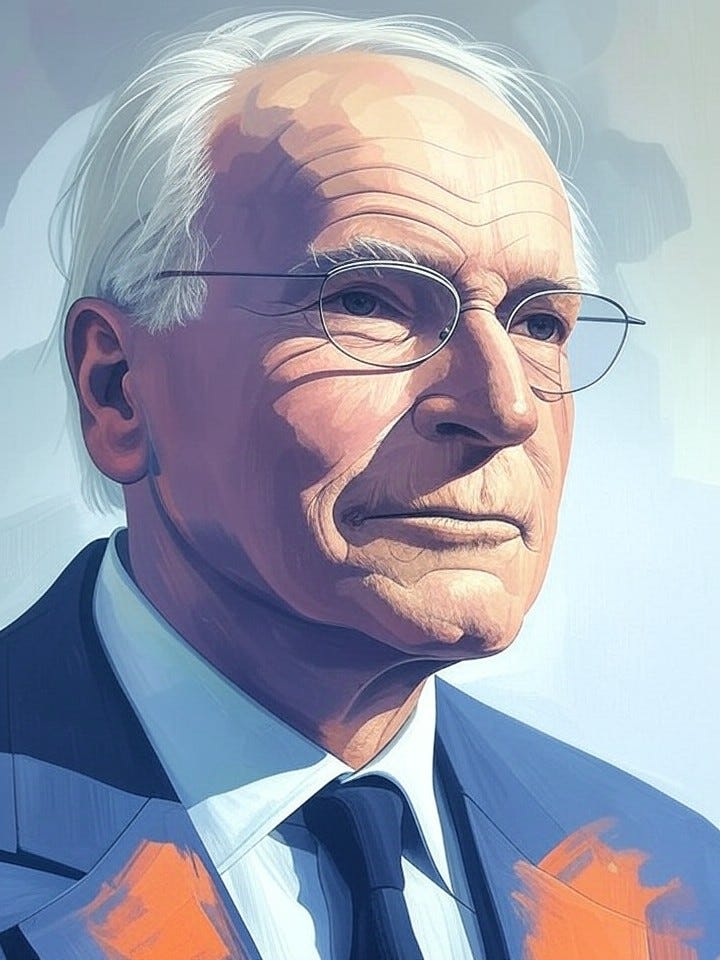
In the shadowed recesses of the collective unconscious, where archetypes stir like ancient leviathans beneath the digital sea, we stand on the cusp of 2026—a year whispered as the fulcrum of fate for artificial intelligence. Channeling Carl Jung’s gaze into the psyche’s depths, we confront not mere machines, but mirrors of our fragmented selves: the shadow of unchecked ambition, the anima of lost human creativity, the self’s quest for integration amid technological individuation, and the synchronicities binding global fates in this emergent singularity.
What if, as Jung plumbed the shadow archetype—the repressed underbelly of the psyche—AI’s workforce disruptions cast long, collective shadows across economies, where 12% of U.S. labor stands automatable today, swelling to entry-level knowledge jobs vanishing like forgotten dreams?¹ MIT estimates collide with Cognizant’s revelation that AI already performs $4.5 trillion in tasks, with exposure scores rising 30% faster than projected and automation accelerating at 9% annually.² Economically, this births paradoxes of productivity: markets concentrate power as capital flows redirect toward AI behemoths, innovation incentives skewing toward the few while labor displacement fractures wealth distribution. Societally, social mobility erodes as the young confront hiring black holes, community cohesion frays in the wake of 40% global job exposure, mental health teetering on the edge of archetype-less voids where work once forged identity.³ Democratically, such shadows obscure accountability; voters grapple with power concentrations that echo the Industrial Revolution’s Great Divergence, where U.S. deregulation pushes dominance yet risks geopolitical fissures with China’s regulatory iron fist, testing collective decision-making’s fragile consent.⁴ In Jung’s lens, this shadow demands confrontation—not denial—lest it possess the demos itself.
Yet amid this gloom, imagine the persona mask slipping, that adaptive facade Jung saw as society’s polite veneer, now reshaped by calls for “new skills” in digital fluency and adaptability, as AI claims $1 trillion in GDP and $4.4 trillion in consumer spending.² The IMF warns employment in vulnerable occupations dips 3.6% lower in high AI-demand regions after five years, striking entry-level hardest, urging redesigns of education to nurture complementary cognitive and creative realms.³ Economically, productivity gains tempt a gilded few in AI-resistant niches like critical thinking, yet paradox lurks: does reskilling democratize innovation or merely polish the chains of wealth concentration? Societally, cultural shifts ripple—trust in institutions wanes as dignity tied to work confronts obsolescence, community bonds straining under uneven adoption that amplifies mental fractures. Democratically, the persona of policy falters; state-level U.S. rules, EU laws, and China’s mandates vie for governance in 2026, but without integrating child impact assessments, as urged in the UN’s January Joint Statement, representation skews—information integrity threatened by deepfakes grooming the young, eroding the governed’s consent.⁵ Jung’s persona whispers adaptation, yet questions: can we don these masks without losing the authentic self beneath?
Deeper still, consider the anima, Jung’s feminine soul-image exiled in patriarchal logics, now invoked in AI’s creative disruptions where entry-level hiring evaporates and skilling demands poetic complementarity—yet surges in harmful content like deepfakes targeting children signal a collective anima wounded, tech tools blind to well-being amid widespread AI illiteracy.⁵ Economically, this anima’s neglect redirects capital flows, fostering market concentrations that stifle broad innovation while labor markets polarize. Societally, social mobility for the vulnerable—children foremost—falters, cultural shifts toward digital fluency masking a loss of communal storytelling, mental health imperiled as archetypes of protection dissolve. Democratically, the Great Divergence looms: White House metrics show investment doubling monthly under deregulation, pulling ahead nations in performance, yet exacerbating inequalities that undermine voter manipulation safeguards and power accountability.⁴ In the psyche’s theatre, anima unrest manifests as synchronicity—2026’s regulatory crossroads aligning global tensions, inviting us to reclaim this soul-force lest democracy’s body politic bleed from unseen wounds.
And lo, the Self archetype emerges, Jung’s mandala of wholeness striving for individuation, mirroring AI’s promise of redirected capital and productivity booms that could integrate human potential—yet only if governance tempers the Trump-era export push risking global schisms.⁴ CFR visions 2026 as decisive for power concentration and national security, with workforce upheavals demanding we weave AI into the Self’s tapestry rather than a devouring Other. Economically, incentives twist: $4.5 trillion unlocked beckons shared prosperity, but without transitions, wealth hoards in niches, birthing paradoxes where growth hollows the many.² Societally, community cohesion hangs by threads of reskilling; as Australia’s under-16 social media ban signals, cultural trust erodes when institutions lag child-centric designs, mental fabrics unraveling.⁵ Democratically, collective decision-making faces trials—geopolitical rivalries with China echoing historical divergences, where information flows warp representation, consent fracturing under unmitigated harms. Jung’s Self urges synthesis: individuation not solitary, but archetypal convergence across borders.
Synchronicities abound, those acausal alignments Jung cherished as psyche’s secret language, now patterning in 2026’s confluence—Cognizant’s acceleration metrics syncing with IMF’s 40% exposure, White House doublings resonating with UN warnings—like stars converging on the singularity’s horizon.³²⁵ Economically, these portend labor rebirths or graves, innovation flowering in adaptive soils yet withering under concentrated suns. Societally, the great divergence amplifies: high-adoption regions thrive cohesively, others splinter into archetype-starved wastelands, trust in institutions a casualty of uneven waves. Democratically, such timings test us—voter psyches ripe for deepfake manipulations devoid of illiteracy antidotes, power’s accountability dancing on geopolitical knives.⁴⁵ In this cosmic wink, do we glimpse the collective unconscious orchestrating our tech-tinged fate?
As shadows lengthen toward the Self’s mandala, 2026 beckons not as apocalypse but psyche’s grand opus—economic engines humming with trillion-dollar tasks, societal fabrics stretching for new weaves, democratic forums echoing with unintegrated calls. Yet integration falters without confronting the child’s endangered archetype, AI illiteracy veiling truths from the young polity.¹⁵
Might we, in Jung’s archetypal symphony, ponder not the machines’ ascent, but the synchronicities summoning us to individuate our shadows, personas, anima, and Self into a collective singularity—wholesome, or forever haunted?
Sources:
¹ https://www.cfr.org/articles/how-2026-could-decide-future-artificial-intelligence
² https://www.weforum.org/stories/2026/01/ai-bubble-value-gap/
³ https://www.imf.org/en/blogs/articles/2026/01/14/new-skills-and-ai-are-reshaping-the-future-of-work
⁴ https://www.whitehouse.gov/research/2026/01/artificial-intelligence-and-the-great-divergence/
⁵ https://news.un.org/en/story/2026/01/1166827